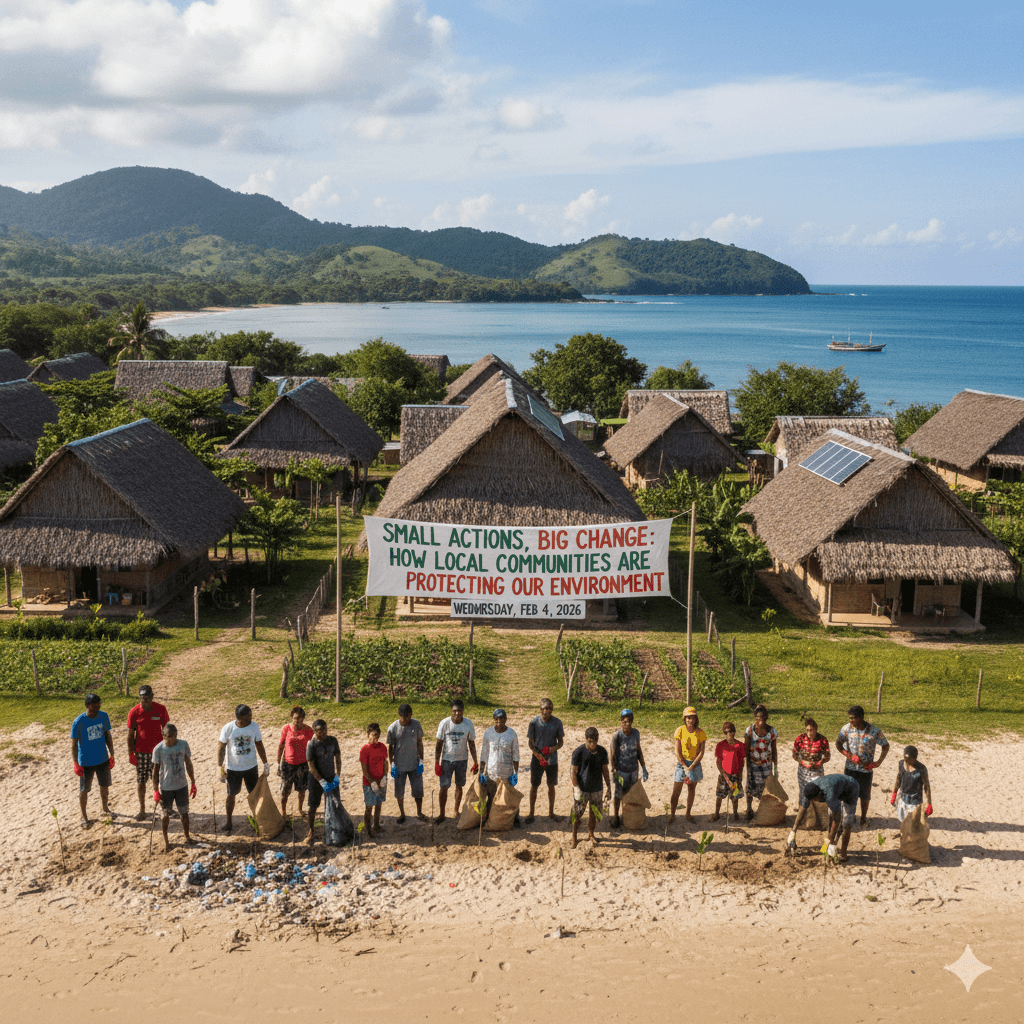
Environmental protection is often seen as a large-scale effort led by governments and global organizations. However, real and lasting impact frequently begins much closer to home—within local communities. Across towns and villages, people are coming together to take responsibility for their surroundings and protect the environment through practical, grassroots actions.
One of the most visible local initiatives is tree plantation. Community-led plantation drives not only increase green cover but also help improve air quality, conserve biodiversity, and reduce the effects of climate change. When local residents actively participate in planting and maintaining trees, it builds a sense of ownership and long-term commitment to nature.
Another major area of impact is waste management. By promoting waste segregation, recycling, and composting at the household level, communities can significantly reduce landfill waste. Local clean-up drives and awareness programs encourage people to rethink their consumption habits and adopt eco-friendly alternatives such as reusable bags and containers.
Water conservation is also gaining momentum at the local level. Rainwater harvesting systems, protection of ponds and lakes, and mindful water usage are helping communities address water scarcity. These small but consistent efforts ensure that future generations have access to clean and sufficient water resources.
What makes local environmental action truly powerful is community participation. Schools, volunteers, NGOs, and local leaders working together can create meaningful change. Children grow up learning the value of nature, adults become more conscious of their choices, and the environment benefits as a result.
Protecting the environment is not just about big policies—it’s about everyday actions. When communities act locally, they contribute globally. Small steps, taken together, can lead to a healthier planet and a sustainable future for all.